Nothing Can Change Their Nature
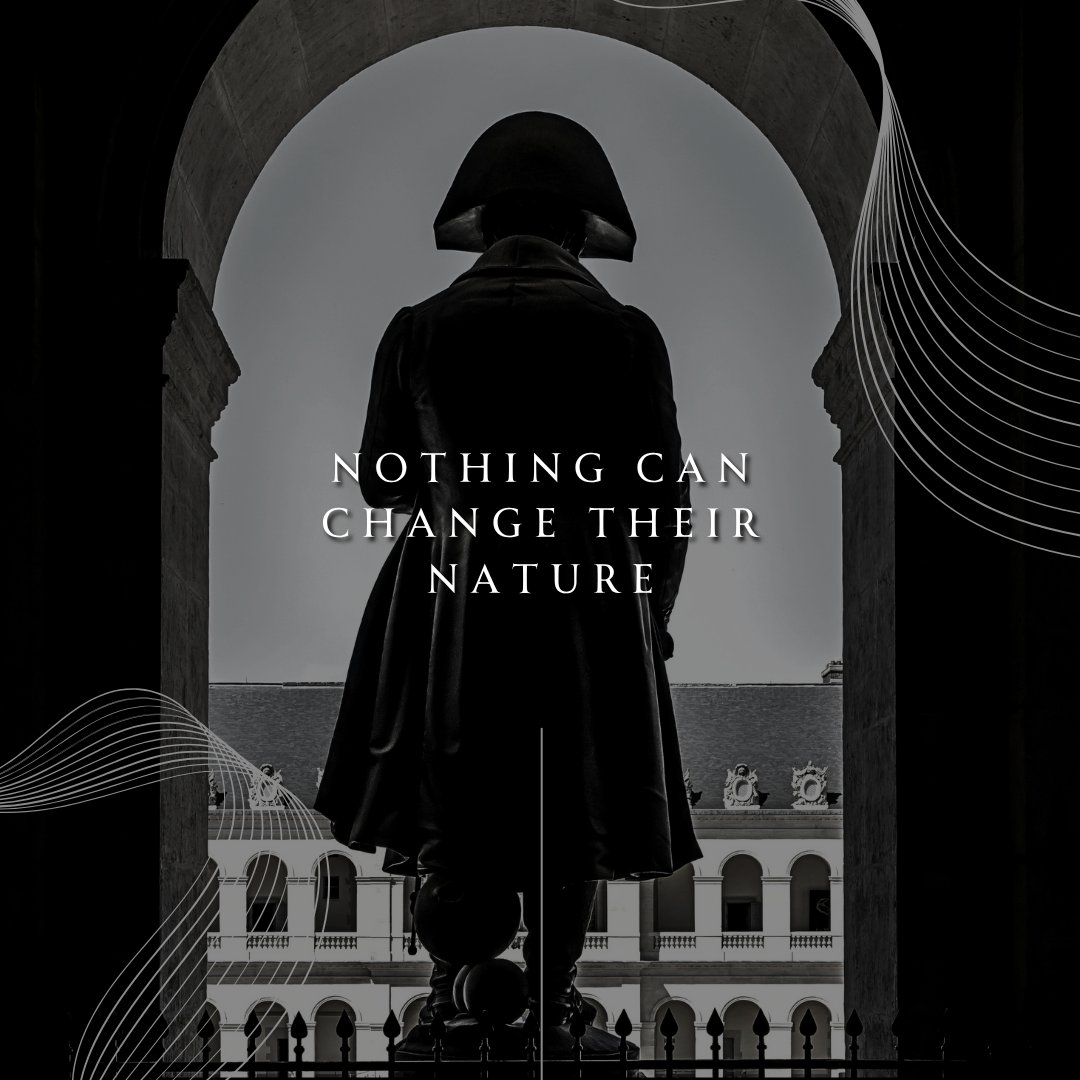
Napoleon read history the way other men read maps.
He kept one belief at the centre of everything he did: "Men have always been the same, nothing can change their nature. It is from the past that I will draw my lessons to shape the present."
He was making a timeless observation, and what he saw was that human nature is fixed. Our tools change and our clothes change, but the person underneath stays the same. The fear, the envy, the wish to matter. A man scheming in the Roman Senate and a man scheming in a modern office are the same animal in different costumes.
If that idea is right, history stops being a story you read and becomes an instruction manual. Every situation you will ever face, somebody has already faced, and somebody wrote down how it went. When Napoleon studied Caesar and Alexander, he was interpreting data from experiments on human nature that had already been run.
His own read on people was dark. He found most men weak, selfish in small ways, and easy to guide. You could steer a man with flattery or with fear, and you could buy his loyalty with a ribbon pinned to his chest.
Then he attached a second idea that softens the whole picture: the strong are good, and only the weak are wicked.
He believed cruelty grows out of weakness. The liar lies because he is afraid of what the truth will cost him. The backstabber stabs because he knows he cannot win in the open. A genuinely strong person can afford honesty and generosity, because he has nothing to protect by being small.
Follow that logic and the path to goodness changes. If wickedness comes from weakness, then the way to become good is to become strong. You do not lecture a drowning man into calmness. You teach him to swim.
There was another side to Napoleon, though, one the history classes tend to skip. The man was overflowing with what the Sanskrit tradition calls rasa, the juice of life, its taste. He read books on horseback. He dictated letters to several secretaries at once while pacing the room, jumping from war to law to the sugar beet industry. When he invaded Egypt he brought along more than a hundred scholars, because conquering the place was never going to be enough for him. He wanted to understand it. He rewrote the legal code of France, and as a young man he even wrote a romance novel. He slept only a few hours a night, pulled out of bed by hunger for life rather than discipline.
The strange thing about that hunger is where it came from. It came from eating. The French have an old saying, appetite comes with eating, and nobody ever proved it on a bigger stage. The more he won, the more he enjoyed winning. Each victory sharpened his taste for the next one, and the deeper he went into life, the more life gave him back.
That combination is what made him rare. Realism about people, paired with enthusiasm for living. The cynics among us see clearly but stop enjoying anything, while the enthusiasts enjoy everything and see nothing. Napoleon held both at once, with no illusions about human nature and no loss of appetite for the human experience.
Even at the very end, exiled on a rock in the middle of the ocean, he spent his days writing his memoirs, still drawing lessons from the past to shape a future he would not live to see.
"The strong man is the one who can master himself."